OSEP Partners
Three Television Access grants from the U.S. Department of Education, Office of Special Education Programs (OSEP) provide support for creating audio description and American Sign Language (ASL) interpretation for broadcast media that is appropriate for use in the classroom setting. Bridge Multimedia, Dicapta, and DCMP operate projects funded by these grants.

Bridge Multimedia
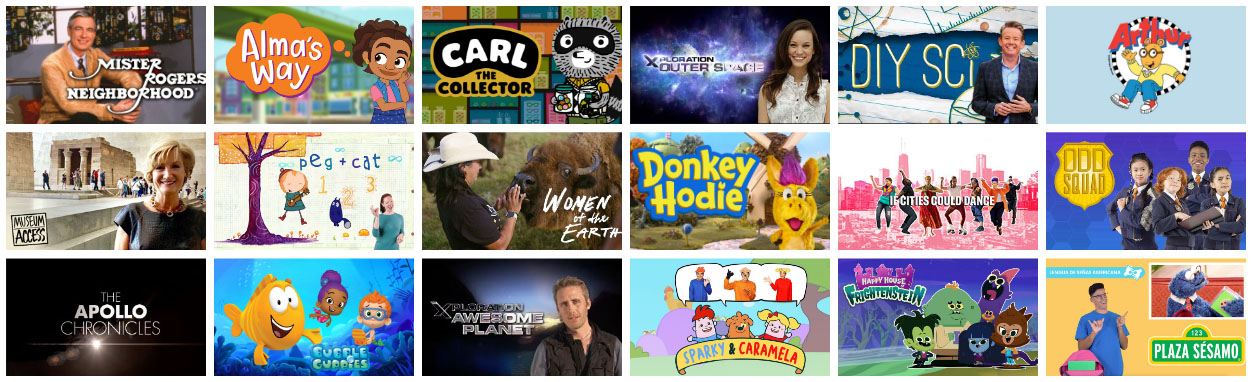
Bridge Multimedia gives teachers a powerful set of universally designed media resources. Each year, Bridge produces 300 hours of audio-described educational programming and over 100 hours of ASL-interpreted content. These shows air in the E/I blocks of ABC, CBS, NBC, The CW, Mi Telemundo, and PBS, making them easy to integrate into lessons or assign for at-home viewing. In addition, Bridge created six fully accessible educational games and apps designed so all students can play and learn together. With specialists in education, linguistics, and child development guiding every project, Bridge ensures that what reaches classrooms supports meaningful, engaging learning for every child.
Dicapta: Access for English Language Learners with Disabilities
Thanks to OSEP funding, Dicapta has witnessed remarkable transformations in classrooms serving all students including English language learners with disabilities. Through Dicapta's bilingual accessibility work, students previously unable to fully engage with educational content are now active participants. Their collaboration with Sesame Workshop has brought beloved programs like Sesame Street and Cookie Monster's Foodie Truck to life with Spanish audio descriptions and creative ASL versions on their YouTube channel. Dicapta is grateful that OSEP support has enabled the expansion of the DCMP video library to include most of the educational content it produces with toggleable Spanish/English captions and audio descriptions. Teachers tell them these resources have been game-changers for students with disabilities learning English. The impact extends beyond classrooms with accessible content that is readily available, creating meaningful learning continuity between school and home for these deserving students.
Described and Captioned Media Program
DCMP is the only source of free, accessible educational videos for the 7.5 million students with disabilities across the United States. DCMP creates audio description and ASL for educational broadcast content through a Television Access grant. 100% of the content made accessible by DCMP is available to schools and families through its streaming platforms. Additionally, DCMP develops new technologies for the creation and delivery of accessible media, provides training for using these resources in the classroom, creates continuing education opportunities for educators, and advocates for systemic change in media production, distribution, and utilization.
OSEP
The U.S. Department of Education, Office of Special Education Programs (OSEP) is dedicated to improving results for infants, toddlers, children and youth with disabilities ages birth through 21 by providing leadership and financial support to assist states and local districts.
The Individuals with Disabilities Education Act of 2004 (IDEA) authorizes formula grants to states and discretionary grants to institutions of higher education and other non-profit organizations to support research, demonstrations, technology and personnel development and parent-training and information centers.
Television Access Grants
OSEP Television Access grants that fall under Educational Technology, Media, and Materials for Individuals with Disabilities Program (CFDA 84.327), provide funding to enhance accessibility for children with disabilities. These grants support projects that add audio description and/or sign language interpretation to broadcast content.
The purpose of these grants is to ensure children with disabilities have access to the same educational media and materials as their peers. Projects develop captioning, video description, and sign language interpretation that align with educational standards to aid learning.